Housing & Property in Thailand
In short
A foreigner cannot own land in Thailand, but can own a condo unit outright, provided the building's foreign quota stays under 49%. For a house, the usual route is buying the building and leasing the land for renewable terms of up to thirty years. Many foreigners rent the first year before deciding, and those who buy a condo do so mainly for the legal simplicity of freehold compared with the more complex structures land requires.
Thai law treats land and the buildings sitting on it very differently, and that distinction is the key to understanding nearly every housing decision a foreigner makes here: you cannot own land, but you can own a condominium unit outright, within certain limits. This guide covers the real options, from buying a condo to renting long-term to building a house on leased land. See also our Buying Land & Property in Thailand glossary entry for the legal detail on the land itself, and our Transport & Vehicles in Thailand guide for the other big asset that usually comes once housing is sorted.
What does this actually mean?
The single most important rule, and the one that confuses newcomers most, is that a foreigner cannot own land in Thailand under general law, but can own a condominium unit outright (freehold), provided the foreign ownership quota for the entire building doesn't exceed 49% of the total sellable unit area. That 49% cap makes buying a condo the simplest and most direct route to real property ownership for a foreigner, with no need for marriage, a Thai company, or a lease. For a standalone house, the usual route is buying the building itself while leasing the land underneath for a renewable term, typically thirty years, since the house itself can be registered in the foreigner's name even though the land cannot.
Common patterns
The most common pattern among foreigners settling long-term is starting out renting, often for the full first year, while getting to know the area and confirming whether the relationship with the country (and, in many cases, with a Thai partner) is going to last. Those who decide to buy tend to lean toward a condo if they'll be living in a city or tourist area, precisely because of the legal simplicity of freehold, while those looking for a house with a garden or more space tend to build on leased land or register the land in a Thai partner's or family's name, with proper legal safeguards to protect the foreigner's investment in case of separation. A common mistake is underestimating a condo's maintenance costs and common-area fees, which can add up significantly over the years if not budgeted for from the start.
Practical advice
Before buying any condo, it's worth confirming in writing with the building's management that the foreign ownership quota still has room within the legal 49% cap, since without that room the transaction simply cannot be registered in the foreign buyer's name. For a house on leased land, a properly drafted lease from an independent lawyer, with clear clauses on renewal and what happens to the building at the end of the term, heads off a good deal of the trouble that shows up years later. See also our Buying Land & Property in Thailand glossary entry for why the Thai company structure, though it exists, carries its own legal risks if not used correctly.
Frequently asked questions
Can a foreigner own a house in Thailand?
They can own the building itself, but not the land beneath it, except in very limited exceptions. The usual route is leasing the land for a renewable term while the house is registered in the foreigner's own name.
What does it mean for a condo to be freehold in Thailand?
It means the buyer holds outright ownership of that unit, just like in most Western countries, provided the building's total foreign ownership quota stays under the legal 49% cap.
Is it better to rent or buy when arriving in Thailand?
Most advisors and experienced residents recommend renting for at least the first year, since it gives time to get to know the area and confirm the decision to settle here is a lasting one before committing significant capital.
Stories about Housing & Property in Thailand
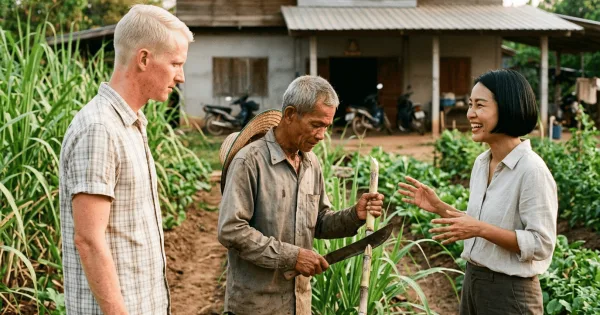
We shared a room with separate beds and her family wouldn't let me pay for a single meal. My last night, she chose to sleep somewhere else.
After seeing plenty of bar scams in Thailand, a Swedish man was introduced online to a woman from Isaan looking for something serious. Months of daily calls and a visit to her family later, the relationship never quite came together. It wasn't the love story he hoped for, and it wasn't a scam either.
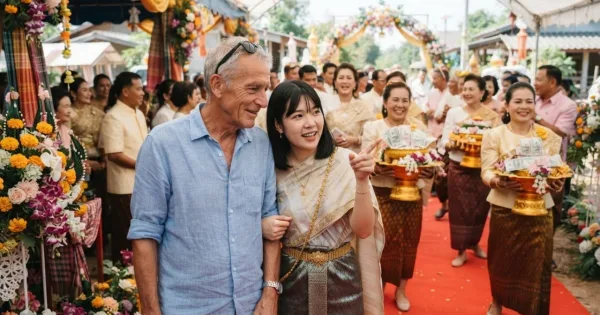
At 60, I flew to a village in Isaan for a wedding that wasn't mine, and for a few hours it felt like it was.
I was 60 when Kop, 37 years younger than me, brought me to her cousin's wedding in a village in Isaan. I met her parents, slept apart from her out of respect for her family's rules, and watched a full traditional Thai wedding, dowry included, feeling for a few hours like part of a family I barely knew.

I came to Udon Thani for a two-week hip surgery. The nurse who cared for me those two weeks is now my wife.
Peter, a 62-year-old Australian, travels to Udon Thani to have hip surgery at a private hospital, avoiding the long public waiting list back home. Ploy, the head nurse on his ward, becomes far more than his carer during recovery.
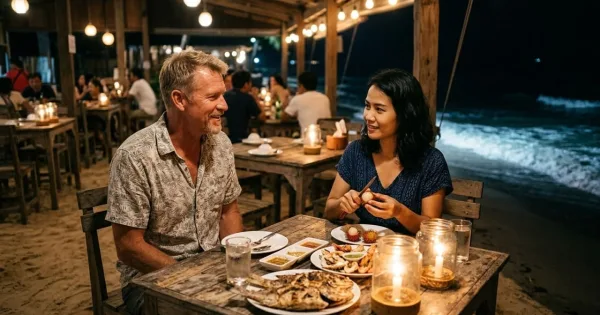
She suggested I spend some time in Pattaya alone. I didn't know it was a test, and I failed it.
A 54-year-old South African met Noi, 32, near Khao San Road in 2019. She never asked him for money despite her troubles, and the Koh Chang trip was perfect. But one night of drinks in Pattaya without her changed everything, and the pandemic finished it off.
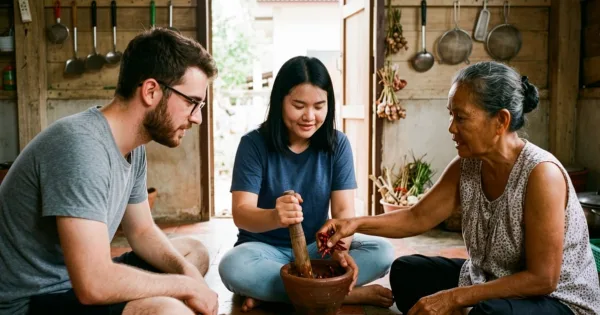
Her mum had always planned for her to move to Germany and run the family business. I showed up two weeks before that was meant to start.
A 25-year-old British English teacher met Nisa in Khon Kaen, a university graduate from Isaan with zero interest in the nightlife scene. Her mum, living in Germany, had other plans for her daughter. This is the story of how he won the family over and decided to stay in Thailand.
I found her dancing in a Soi Cowboy bar. Nine months later our daughter was born in Thailand.
A 31-year-old Romanian recounts how a cheap flight booked on a whim sent him back to Bangkok alone, where he reconnected with Jit at a Soi Cowboy bar. A pregnancy, months of paperwork and a wedding later, they're now a normal family in the UK.