Thai Family & In-Laws: Real Stories
In short
Marrying a Thai partner rarely means marrying just her — it means entering a network of parents, siblings, cousins, and often grandparents living under the same roof. Winning over that family ends up mattering just as much as the relationship itself. In more than one case, the family takes months to say anything at all, and that silence carries as much weight as any spoken objection.
In many of these stories, the couple isn't the only thing being tested — the whole family is. A father who approves with a silent handshake, a mother who serves rice first, a village that decides in a single dinner whether the foreigner belongs. This guide gathers the stories where meeting the Thai family — and being accepted by it — is central to what happens. Unlike our Marriage guide, which follows the couple's relationship over time, this one focuses on that specific moment and on the bond with the extended family.
What does this actually mean?
The pattern repeats from story to story: the first visit to the parents, the father's silent evaluation over dinner, and later living alongside the extended family — sometimes twelve people under one roof — something most foreigners have no equivalent for in their own culture. Isaan comes up especially often as the setting for these stories, the region where the extended-family structure is still strongest and where visits to the home village become the real test of acceptance.
Common patterns
The specific rituals repeat too: the sin sod handed over in front of the whole family, a father who says nothing all evening and finally shakes hands for a long moment, a mother who refills the foreigner's plate the instant it drops below seventy percent. In several stories, the entire village turns out for the wedding and collectively decides whether the outsider belongs. Food carries weight here beyond the culinary: turning down what's served, or eating it without complaint, gets read as a signal about the foreigner's character.
Practical advice
When the family objects — as happens in several stories on this page, usually because different plans were already laid out for the daughter — it tends to happen early, not late. And when it accepts, the clearest sign isn't words but gestures. Related to this, see our Wedding in Thailand guide too, and our Marriage guide for what happens once the family has already given its approval.
Frequently asked questions
What is sin sod?
It's the traditional Thai dowry the groom gives the bride's family, usually in cash and gold, as a show of respect and ability to provide for the family. It comes up in several stories on this page, sometimes as a symbolic amount and sometimes as a source of real conflict.
Is it normal to live with extended family in Thailand?
Yes, and several stories in this collection describe living alongside in-laws, siblings-in-law, and even grandparents under one roof — far less common in the home culture of most of the foreigners in these stories.
What happens when the family objects to the relationship?
In these stories it usually stems from prior plans for the daughter — education, another suitor, a family business — rather than rejection of the foreigner himself. Objection tends to show up early, not as a late surprise.
How do you know if the family has accepted the foreigner?
Almost never through explicit words. In these stories, acceptance shows up in gestures: serving food without being asked, a long handshake, being included at the table as one more member.
Stories about Thai Family & In-Laws: Real Stories
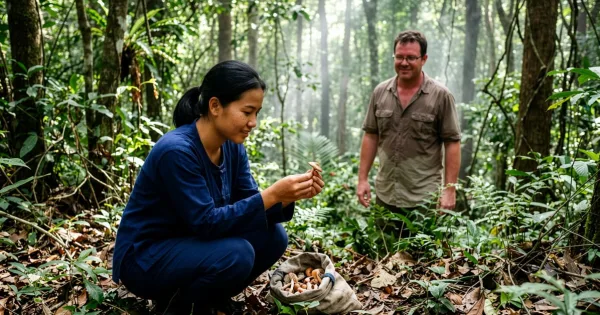
An Australian messaged me to say the woman I'd fallen for was his girlfriend of a year. Today she's my wife.
At 44, divorced for a decade, an American meets Tay on Facebook. A month later, already in love, he finds out she'd spent the past year with an Australian man who'd visited her village in Isan. She confesses everything honestly and asks for one chance. Years later, they're married and building a house to retire in.

I kept coming back to Pattaya for thirteen years. In the third bar on Soi Honey I met Jib.
A 42-year-old Dutchman started visiting Pattaya in 2010 and never stopped coming back every January. In 2022, in a bar on Soi Honey, he met Jib, from Isaan. Two years later he bought land from her family, fully aware of what that meant.
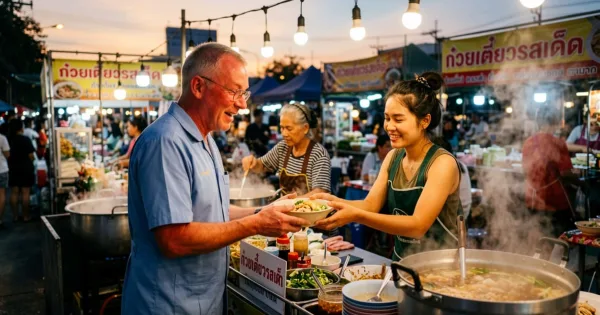
She gave me a free bowl of noodles at her mum's stall. The buffalo has never been sick.
A 50-year-old Brit, freshly divorced, met Nitia, a maths teacher in Khon Kaen who'd spent years keeping men at arm's length. Years of FaceTime, visits dodging COVID, and a first daughter later, the wedding is no longer a possibility but a foregone conclusion.
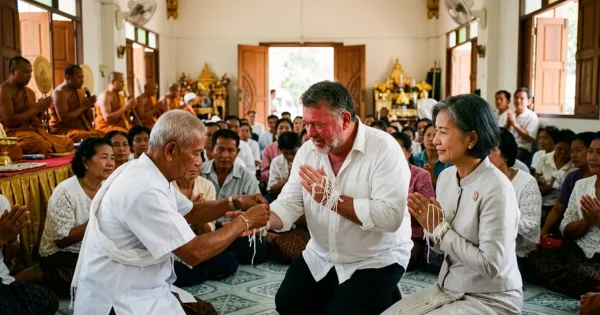
I told her I wouldn't send a single baht until we met in person. She accepted without arguing.
A 61-year-old American recounts how, after a failed relationship in Vietnam, he met May, a refreshingly honest Thai civil servant. Years of video calls and a temple wedding in Kanchanaburi with nearly 50 blessing strings later, he gained an entire family.
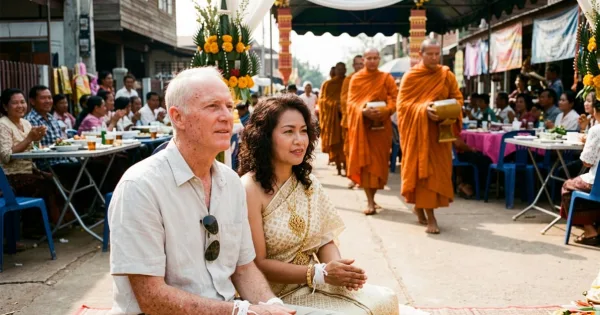
I opened a joint account with the million-baht dowry. She started quietly withdrawing money without telling me.
A 62-year-old retired American recounts how he met Dada at a Pattaya massage shop, married her in a Buddhist ceremony in Isan, and everything fell apart when she started quietly withdrawing money from the joint account he'd opened for the dowry.
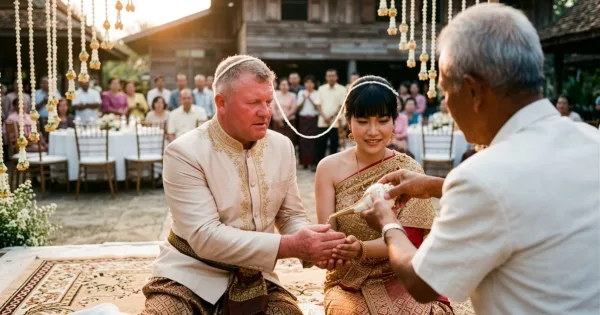
350 guests, a village chief consulting his charms for the date, and years later a message asking for a divorce.
A 50-year-old Australian recounts how a 350-guest Thai wedding in Phuket turned into a guest house in Patong, an affair with another woman, bar fights involving the police, and a final message asking for a divorce.