Transport & Vehicles in Thailand
In short
The motorbike is the default vehicle for most foreign residents in Thailand, usually bought secondhand and registered via the blue book at the Department of Land Transport. A car typically comes as a second stage, almost always bought locally since importing one is prohibitively expensive. A tuk-tuk is nearly always a licensed commercial fleet vehicle, not something a private resident owns. Insurance and checking a vehicle's history before buying are the two steps that head off the most trouble down the line.
Getting around Thailand long-term almost always means ending up owning something with an engine, whether that is a secondhand motorbike bought within the first month or a car financed years into a longer stay. This guide covers the practical side of getting on the road legally: buying a motorbike or a car, insuring it, what a tuk-tuk actually is and why almost no foreigner ends up owning one, and how ride-hailing apps like Grab fit into daily life outside the big cities. See also our Driving License glossary entry for the paperwork that has to come first, and our Buying Land & Property in Thailand glossary entry for the bigger asset side of settling down here.
What does this actually mean?
The motorbike is the default vehicle for most long-term foreign residents: cheap to buy secondhand, cheap to maintain, and able to move through traffic a car simply cannot. The secondhand bike market runs mostly between private sellers or through small dealers, with registration (the so-called blue book) transferred at the provincial Department of Land Transport office. A car usually comes as a second stage, once kids, a settled house, or simple tiredness of the rain enter the picture; importing a car from abroad carries import duties so steep that almost nobody does it, and the vast majority buy locally instead, new or used. A tuk-tuk, meanwhile, is almost never a private vehicle: these are licensed commercial taxi fleets, not something a resident buys for personal use, however much the tourist image suggests otherwise.
Common patterns
The most common pattern among foreigners settling here is starting with a weekly or monthly rental bike while visa and driving licence paperwork gets sorted, and moving to a purchase once the stay stops feeling temporary. Cash purchase dominates the secondhand bike market, with the price negotiated directly with the seller and verified by matching the chassis number against the blue book before any money changes hands. For a car, financing through a Thai bank or the dealership itself is more common than paying outright, though it requires a credit history and sometimes a guarantor, which complicates the process for anyone new to the country. A recurring risk pattern is buying a secondhand bike or car without checking it is free of outstanding loan debt tied to the vehicle, which can complicate the title transfer later.
Practical advice
Before buying any vehicle, it is worth confirming the necessary driving licence is already sorted, since riding or driving without one voids any insurance claim after an accident, with real legal and financial consequences. When buying secondhand, bringing along someone fluent in Thai to check the blue book and the vehicle's history against each other heads off most of the common problems. Vehicle insurance, while not always required beyond the legal minimum policy, makes a real difference after a serious accident, and it is worth understanding the coverage tiers before signing anything. See also our Vehicle Insurance in Thailand glossary entry for what each policy type actually covers.
Frequently asked questions
Is it hard for a foreigner to buy a motorbike in Thailand?
Not legally: a foreigner can buy and register a motorbike or car in their own name without needing Thai citizenship, using a passport and, depending on the province, a residence permit or address certificate. The real difficulty is usually verifying the vehicle's history, not the purchase paperwork itself.
Can I import my own car into Thailand?
It is technically possible but rarely worthwhile: import duties on private vehicles are very high, often exceeding the value of the car itself, so the vast majority of foreign residents buy a vehicle already in Thailand instead of bringing their own.
Do I need insurance to ride a motorbike in Thailand?
The law requires a minimum compulsory insurance (known as Por Ror Bor) for every registered vehicle, covering basic third-party personal injury. That minimum does not cover damage to the vehicle itself or full liability, which is why most residents also take out a broader voluntary policy on top.
Stories about Transport & Vehicles in Thailand
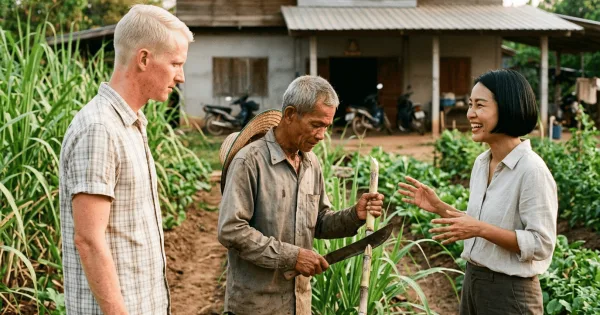
We shared a room with separate beds and her family wouldn't let me pay for a single meal. My last night, she chose to sleep somewhere else.
After seeing plenty of bar scams in Thailand, a Swedish man was introduced online to a woman from Isaan looking for something serious. Months of daily calls and a visit to her family later, the relationship never quite came together. It wasn't the love story he hoped for, and it wasn't a scam either.
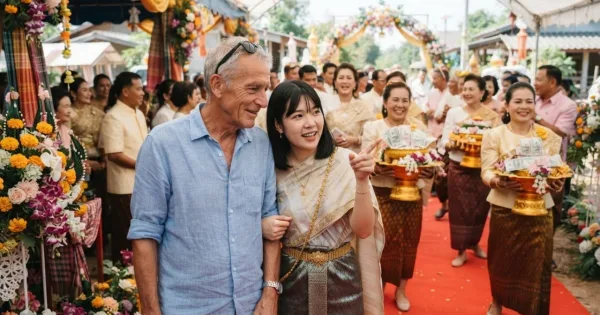
At 60, I flew to a village in Isaan for a wedding that wasn't mine, and for a few hours it felt like it was.
I was 60 when Kop, 37 years younger than me, brought me to her cousin's wedding in a village in Isaan. I met her parents, slept apart from her out of respect for her family's rules, and watched a full traditional Thai wedding, dowry included, feeling for a few hours like part of a family I barely knew.

I came to Udon Thani for a two-week hip surgery. The nurse who cared for me those two weeks is now my wife.
Peter, a 62-year-old Australian, travels to Udon Thani to have hip surgery at a private hospital, avoiding the long public waiting list back home. Ploy, the head nurse on his ward, becomes far more than his carer during recovery.
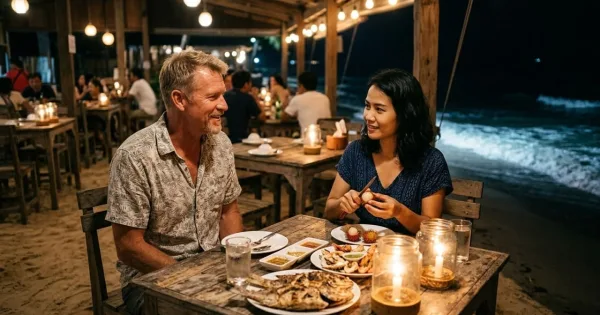
She suggested I spend some time in Pattaya alone. I didn't know it was a test, and I failed it.
A 54-year-old South African met Noi, 32, near Khao San Road in 2019. She never asked him for money despite her troubles, and the Koh Chang trip was perfect. But one night of drinks in Pattaya without her changed everything, and the pandemic finished it off.
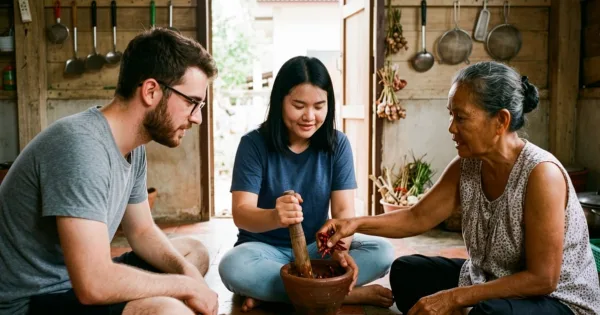
Her mum had always planned for her to move to Germany and run the family business. I showed up two weeks before that was meant to start.
A 25-year-old British English teacher met Nisa in Khon Kaen, a university graduate from Isaan with zero interest in the nightlife scene. Her mum, living in Germany, had other plans for her daughter. This is the story of how he won the family over and decided to stay in Thailand.
I found her dancing in a Soi Cowboy bar. Nine months later our daughter was born in Thailand.
A 31-year-old Romanian recounts how a cheap flight booked on a whim sent him back to Bangkok alone, where he reconnected with Jit at a Soi Cowboy bar. A pregnancy, months of paperwork and a wedding later, they're now a normal family in the UK.