Cultural Differences
In short
Every relationship on this site involves some cultural friction, however well the couple gets along — indirect communication and "face-saving" over confrontation, Buddhism's quiet influence on daily life, and financial gestures toward a partner's family that read as respect in Thailand but can look suspicious to a foreigner at first. Asking instead of assuming avoids most of the misunderstandings documented here.
No relationship between a foreigner and a Thai woman is free of cultural friction, no matter how well the couple gets along. This guide covers the cultural differences that come up most often in our stories, from communication style to the role religion plays in everyday life. For the most concrete version of this culture clash — the one that happens inside the partner's extended family — see our Thai Family guide.
What does this actually mean?
Indirect communication is perhaps the most frequently cited difference: in Thai culture, avoiding open conflict and "saving face" — one's own and others' — usually matters more than direct confrontation, which can be mistaken for evasiveness by foreigners used to direct frankness. Buddhism, present in daily life in subtle but constant ways, also shapes attitudes toward suffering, patience and fate that sometimes clash with a more Western mindset of control and planning.
Common patterns
Another common friction point is how financial gestures get interpreted: giving money or gifts to a partner's family is understood in Thailand as a sign of respect and commitment, while many foreigners initially interpret it with suspicion. Hierarchical respect toward family elders, the importance of not making someone "lose face" in public, and a different relationship with time and punctuality round out the list of differences most mentioned in our stories.
Practical advice
Asking instead of assuming, and accepting that silence or a smile don't always mean the same thing as in the foreigner's home culture, avoids a good part of the misunderstandings documented here. Learning even the basics about Buddhism and Thai family structure helps make sense of behaviors that would otherwise be hard to understand.
Frequently asked questions
What are the biggest cultural adjustments for a foreigner?
Indirect communication, the importance of "saving face" for oneself and others, and a different relationship with family hierarchy tend to be the adjustments that take the longest to absorb.
How does communication style differ?
Direct confrontation and an explicit "no" are usually avoided, in favor of indirect or evasive responses that a foreigner might misread as a lack of clarity.
What role does religion play in daily life?
Buddhism shapes everyday attitudes toward patience, karma and accepting hardship, functioning more as a cultural frame of reference than as a strict, visible religious practice.
Do money or gift gestures mean something different culturally?
Yes: giving money or gifts to a partner's family is read as respect and commitment, not a transaction, which often clashes with a foreigner's initial perspective.
Stories about Cultural Differences

I only got the health insurance because the retirement visa required it. Eight months later, that mandatory paperwork was the one thing that stopped a heart attack from wiping me out financially.
Graham, a 68-year-old British retiree, reluctantly takes out the mandatory health insurance for his retirement visa in Hua Hin. Months later, a heart attack teaches him why the policy he saw as a formality turned out to be the most important decision he made moving here.

I was 27 and felt invincible, so I never bothered with health insurance. A motorbike accident on Koh Samui taught me exactly what that feeling of invincibility costs, in baht and in loan interest.
Jordan, a 27-year-old Canadian working remotely from Koh Samui, never saw the need for private health insurance. A motorbike accident leaves him with a hospital bill that takes over a year to finish paying off.
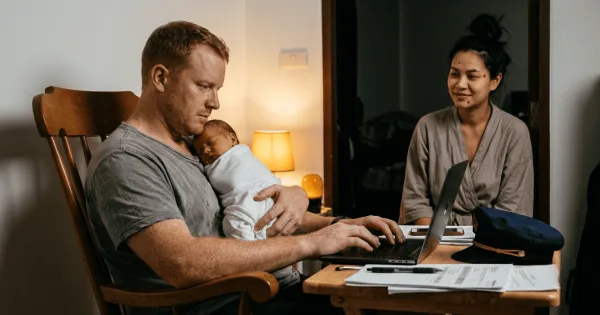
Our daughter was born in Chiang Mai on a Friday afternoon, and by Monday we were already arguing over which surname would go on each of her two passports.
Mark, a 34-year-old Canadian, and his wife Nam navigate the weeks following their daughter's birth in Chiang Mai, racing against the separate deadlines of the Canadian embassy and the Thai civil registry to secure her dual nationality.
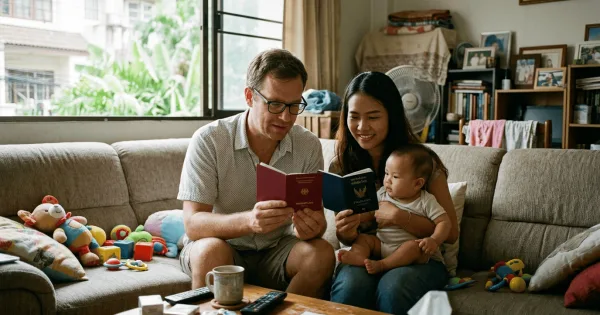
The German embassy asked me for a DNA test to recognise my own son. It took four months, and for that whole stretch my son legally didn't exist for any country except Thailand.
Felix, a 41-year-old German, discovers that legally recognising his son born in Bangkok, since he and the mother, Ploy, weren't married, requires a DNA test demanded by the German embassy before citizenship and a passport can be processed.
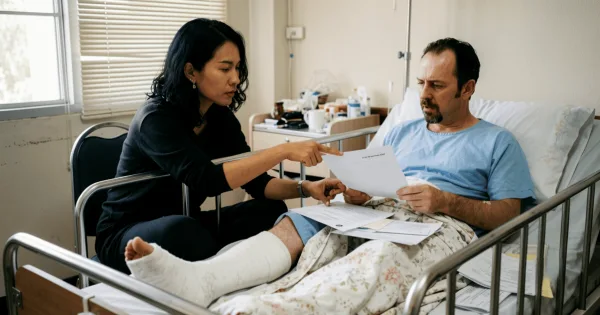
My international driving permit had expired eight months earlier without me even noticing. A car hit me at a junction in Phuket, and that one piece of paperwork ate up every bit of my savings.
Derek, a 47-year-old Briton, has a motorbike accident in Phuket without realising his international driving permit had expired months earlier. The insurer refuses to cover anything, and his partner Ice helps him navigate the weeks that follow.
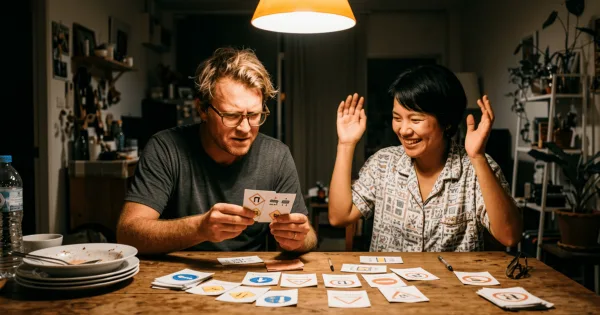
I failed the Thai written driving test twice. On the third try, she made me flashcards with her own drawings because she said I read road signs like they were abstract art.
Aaron, a 39-year-old Australian, fails the Thai written driving test twice. His partner Bell makes him homemade study flashcards, turning the bureaucratic process into something they end up laughing about.