Thai Women Beyond Stereotypes: Real Stories
In short
Story after story, the foreigner arrives convinced he's about to be the one providing stability, and discovers the woman has already been supporting herself for years. The surprise isn't the hard work itself — it's how thoroughly it dismantles the assumptions he arrived with. In more than one story, she's the one who pays for the first dinner, not him.
The image of the hardworking Thai woman is one of the most repeated patterns on this site: women who arrive in the relationship already financially supporting their own family, juggling several jobs, and needing nobody to rescue them. This guide gathers those stories — a long way from the stereotype many foreigners arrive in Thailand carrying. This isn't about denying that patterns of financial dependency exist in some relationships — we document those in our Scams guide — it's about showing the opposite pattern, just as present and far less often told.
What does this actually mean?
These stories feature accountants, teachers, nurses, business owners, and bar workers who were already supporting their own family — sometimes siblings, parents, or children — before meeting the foreigner, bringing a work ethic that surprises more than one man used to a different pace of life. Backgrounds vary widely: there are women from Isaan sending money home since their teens alongside urban Bangkok professionals with careers entirely independent of any foreign help.
Common patterns
The detail that repeats most is what doesn't happen: a complete absence of money requests, insistence on paying her own share, or flatly refusing financial help when it's offered. It's the exact opposite of the pattern in this site's scam stories. When help is accepted, it's usually for something specific and verifiable — a brother's tuition, a mother's medical treatment — never a fixed sum with no clear destination.
Practical advice
Financial independence alone guarantees nothing, but in these stories it's the most consistent signal of a genuine relationship: someone managing her own money, with her own five-year plan, who doesn't need a foreigner to solve her life. Compare against the opposite patterns in our Scams guide, and against the very different dynamic we describe in Sponsor Arrangements, where money is the basis of the relationship from the start.
Frequently asked questions
Is this just marketing, or does it actually show up in the stories?
It shows up constantly: accountants, teachers, nurses, business owners, and bar workers who were already supporting themselves financially before meeting the foreigner, and kept doing so afterward.
What separates these stories from the scam stories?
Mostly the direction the money flows: in these stories it's the woman who insists on paying her share or refuses financial help — the exact opposite of the early money requests that show up in scam patterns.
Do these women usually work in bars or in other fields?
Both show up: there are stories of bar workers with this same work ethic, and stories of university-educated professionals. The pattern doesn't depend on the industry, it depends on the attitude toward money and independence.
Why does it surprise foreigners so much?
Because many arrive in Thailand assuming they'll be the one providing financial stability, and instead meet women who've been running their own lives for years, sometimes supporting their own family too.
Stories about Thai Women Beyond Stereotypes: Real Stories
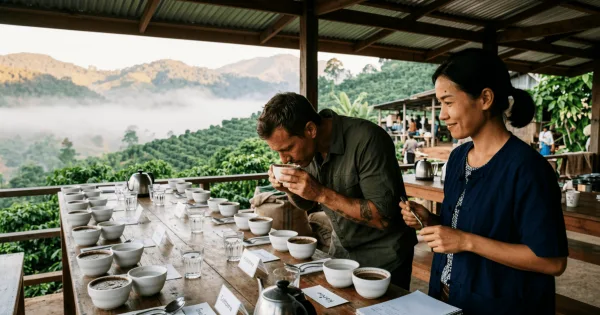
I came to Chiang Rai to buy coffee for a week. Eight years later, I still negotiate prices with the same cooperative, though now I'm also part of the family.
Sam, a 39-year-old Canadian coffee buyer, travels to Chiang Rai to negotiate with a cooperative in the Doi Chang mountains. Kaew, the quality-control manager, corrects him on a lot he thought was good. Eight years later they're still cupping coffee together, now as a married couple.
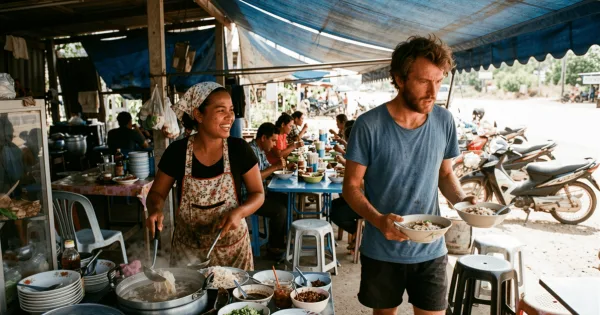
My motorbike broke down outside Korat, on the way to nowhere in particular. Ten years later, I still haven't left.
Liam, a 29-year-old Irish backpacker with no fixed plan, gets stranded outside Korat when his motorbike breaks down next to a noodle stall. Nan, the 24-year-old owner, feeds him without asking. Ten years later they're still together, running the same stall.

I gave up my accountant's job in Cardiff to go climbing in Krabi for two weeks. Five years later I'm still here, living with the woman who taught me to belay my first route.
Tom, a 34-year-old Welshman, takes three months' unpaid leave to climb at Railay, in Krabi. He falls for Fon, the Thai instructor running the climbing school, and five years later he's still there, making a living from climbing instead of accounting.
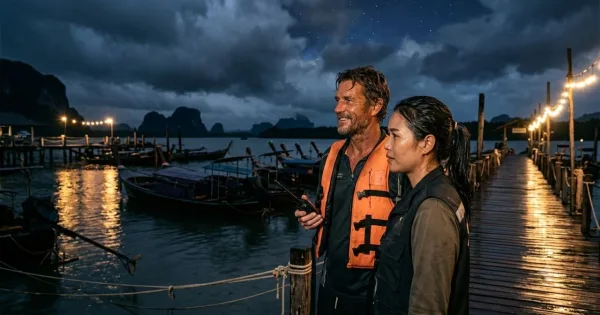
I sent customers to her boat every week without asking for anything back. It took her family two years to stop suspecting me.
Mark, a 46-year-old Australian who runs island tours out of Krabi, starts referring customers to Nam's boat company, a 36-year-old widow who inherited the family business. The relationship builds slowly, and it takes his in-laws two years to trust him.
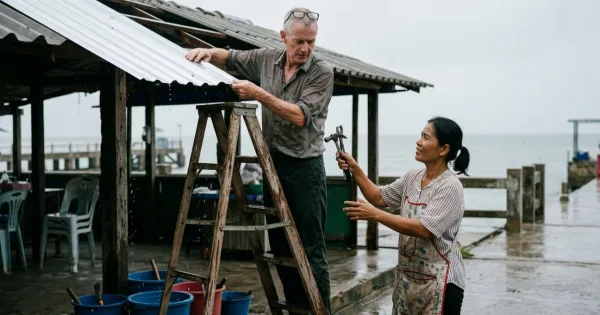
I ate alone at her noodle stall every night for four months. By the time we finally talked, her kids had already decided I was a problem.
James, a 60-year-old Scottish widower, retires to Hua Hin for the golf and starts eating dinner every night at the same noodle stall by the pier. It takes him four months to exchange more than two sentences with Nok, the owner, and much longer to win over her children, who've already heard too many stories about retired farang like him.

I followed her one day instead of believing her story about the family visits. She didn't go to the bus station — she walked into a hotel with another man.
Retired in Pattaya since 2017, a 55-year-old Polish man falls for Apple, a 32-year-old bar girl with three kids to support. For months he believes he's the only man helping her out financially. One day he decides to follow her instead of believing the usual excuse, and discovers he was just one of several sponsors supporting her at the same time.