Buying Land & Property in Thailand
Foreigners cannot own land outright in Thailand — that restriction is one of the more consistent facts in an area where the rules change often, and it shapes how nearly every foreign-Thai couple in these stories eventually approaches buying a home. In practice, that usually means the property is registered in the Thai partner's name, sometimes with a long-term lease or usufruct right for the foreigner, an arrangement that requires real legal trust since Thai law doesn't recognize a common informal workaround: simply putting the foreigner's name on the land title. A foreigner can, however, generally own a condominium unit outright, within a building where foreign ownership doesn't exceed a set percentage of total floor area. See our FAQ pages on buying land and owning a house for the specifics, and always confirm current rules with a Thai property lawyer before signing anything.
Frequently asked questions
Can a foreigner ever own land in Thailand?
Not outright, in almost all cases — that's one of the more stable rules in Thai property law. Land is typically registered in the Thai partner's name instead, sometimes paired with a long-term lease or usufruct right for the foreigner.
Can foreigners own a condo in Thailand?
Yes, generally — a foreigner can usually own a condominium unit outright, as long as foreign ownership in that building stays under the legal percentage limit of total floor area. See our dedicated FAQ for the specifics.
Stories related to Buying Land & Property in Thailand
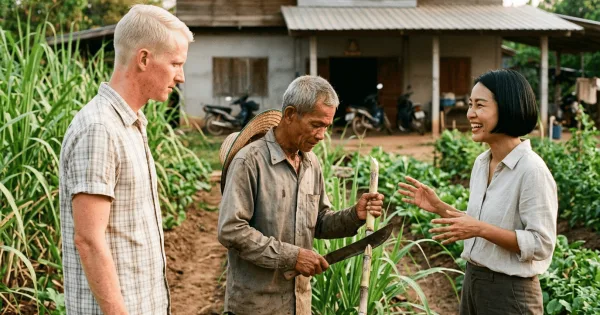
We shared a room with separate beds and her family wouldn't let me pay for a single meal. My last night, she chose to sleep somewhere else.
After seeing plenty of bar scams in Thailand, a Swedish man was introduced online to a woman from Isaan looking for something serious. Months of daily calls and a visit to her family later, the relationship never quite came together. It wasn't the love story he hoped for, and it wasn't a scam either.
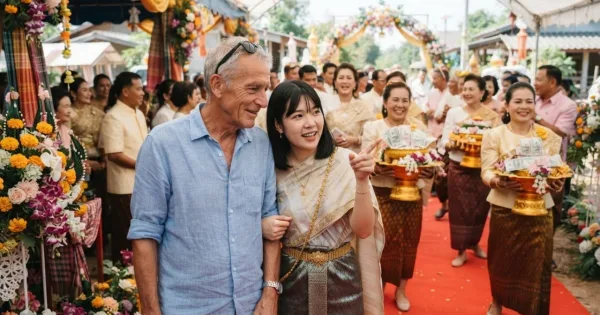
At 60, I flew to a village in Isaan for a wedding that wasn't mine, and for a few hours it felt like it was.
I was 60 when Kop, 37 years younger than me, brought me to her cousin's wedding in a village in Isaan. I met her parents, slept apart from her out of respect for her family's rules, and watched a full traditional Thai wedding, dowry included, feeling for a few hours like part of a family I barely knew.

I came to Udon Thani for a two-week hip surgery. The nurse who cared for me those two weeks is now my wife.
Peter, a 62-year-old Australian, travels to Udon Thani to have hip surgery at a private hospital, avoiding the long public waiting list back home. Ploy, the head nurse on his ward, becomes far more than his carer during recovery.
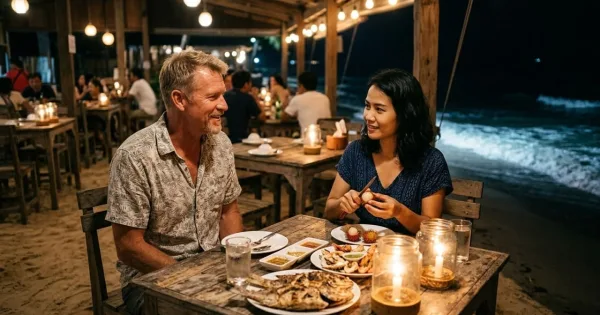
She suggested I spend some time in Pattaya alone. I didn't know it was a test, and I failed it.
A 54-year-old South African met Noi, 32, near Khao San Road in 2019. She never asked him for money despite her troubles, and the Koh Chang trip was perfect. But one night of drinks in Pattaya without her changed everything, and the pandemic finished it off.
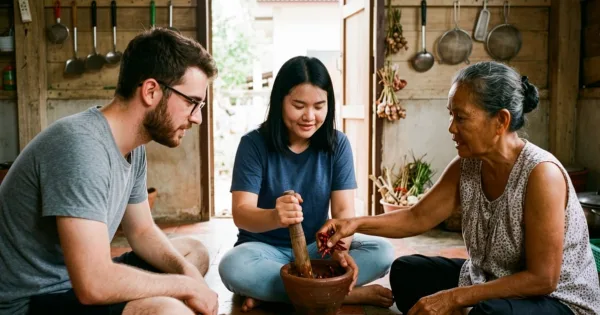
Her mum had always planned for her to move to Germany and run the family business. I showed up two weeks before that was meant to start.
A 25-year-old British English teacher met Nisa in Khon Kaen, a university graduate from Isaan with zero interest in the nightlife scene. Her mum, living in Germany, had other plans for her daughter. This is the story of how he won the family over and decided to stay in Thailand.