Divorce
In short
Not every story here ends in a wedding — some end in divorce, through Thailand's administrative route (both parties agree) or the longer, costlier judicial route (a family court is involved). Cultural strain, financial pressure toward the extended family, and in the worst cases a relationship that was a scam from the start are the causes that come up most in our stories.
Not every story on this site ends in a wedding or a happy ending; some end in divorce, with everything that implies legally and emotionally when one of the two people involved is a foreigner. This guide explains how divorce works in Thailand and what's worth knowing before a situation reaches that point. Child custody is usually the most delicate part of the whole process; see our Visa & Immigration guide too for how it affects the foreign father's immigration status.
What does this actually mean?
Thailand has two main divorce routes: administrative divorce, when both parties agree and can appear together at the civil registry, and judicial divorce, when there's disagreement and a family court is needed. The second route is notably longer and more costly, and usually requires legal representation both in Thailand and, in some cases, in the foreigner's home country.
Common patterns
Among the most cited causes in our stories are the inability to manage cultural differences long-term, wear and tear from financial pressure toward the extended family, and in the hardest cases, discovering that the relationship had been, from the start, a form of scam in Thailand. Dividing assets tends to be the most contentious point, especially when there's property acquired during the marriage or shared businesses.
Practical advice
Getting legal advice in both countries before signing any agreement, clearly documenting which assets predated the marriage, and understanding that divorce can also affect the foreigner's visa status are the points most repeated in the stories that touch on this topic. A well-managed divorce, though painful, avoids years of subsequent legal conflict.
Frequently asked questions
What happens to shared property in a Thai divorce?
It's divided based on whether it was acquired before or during the marriage, with specific rules for marital assets. Since foreigners can't directly own land, this point usually requires specialized legal advice.
Does divorce affect a foreigner's visa status?
Yes, a marriage-based visa becomes invalid after divorce, so a new visa category usually needs to be arranged to continue residing in Thailand.
What are the legal grounds for divorce in Thailand?
They include mutual consent (administrative route) and specific grounds such as adultery, abandonment or serious incompatibility (judicial route), each with different evidence requirements.
Is divorce common in these relationships?
It happens, as in any type of relationship, though the specific tensions of a cross-cultural couple — financial, cultural and family differences — can accelerate or intensify conflicts if not managed in time.
Stories about Divorce

She was the perfect wife for eleven years. Then she used the visa, the custody courts, and social services to walk away with everything.
A British engineer married Knock, a woman from a respectable Bangkok family, and for eleven years she was the perfect wife. Once they moved to the UK on a spouse visa that cost two years and a fortune, everything changed: total control of the money, a women's shelter, a custody battle, and an ending he never saw coming.
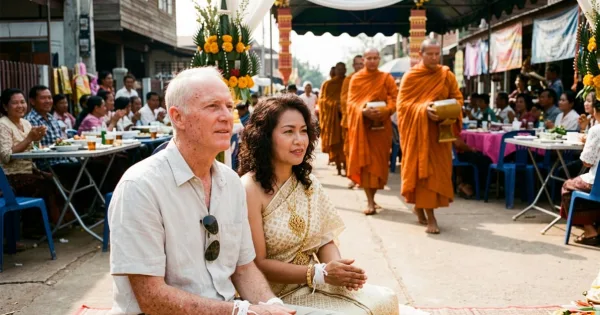
I opened a joint account with the million-baht dowry. She started quietly withdrawing money without telling me.
A 62-year-old retired American recounts how he met Dada at a Pattaya massage shop, married her in a Buddhist ceremony in Isan, and everything fell apart when she started quietly withdrawing money from the joint account he'd opened for the dowry.
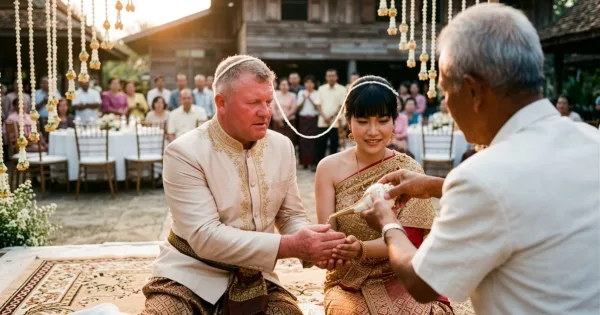
350 guests, a village chief consulting his charms for the date, and years later a message asking for a divorce.
A 50-year-old Australian recounts how a 350-guest Thai wedding in Phuket turned into a guest house in Patong, an affair with another woman, bar fights involving the police, and a final message asking for a divorce.

I have been married nine years and have three kids. And for the first time, I do not know if I should stay.
A Canadian sailor has been married nine years to a woman from Pattaya and has three kids. Now he faces the hardest question of his life: stay or leave.