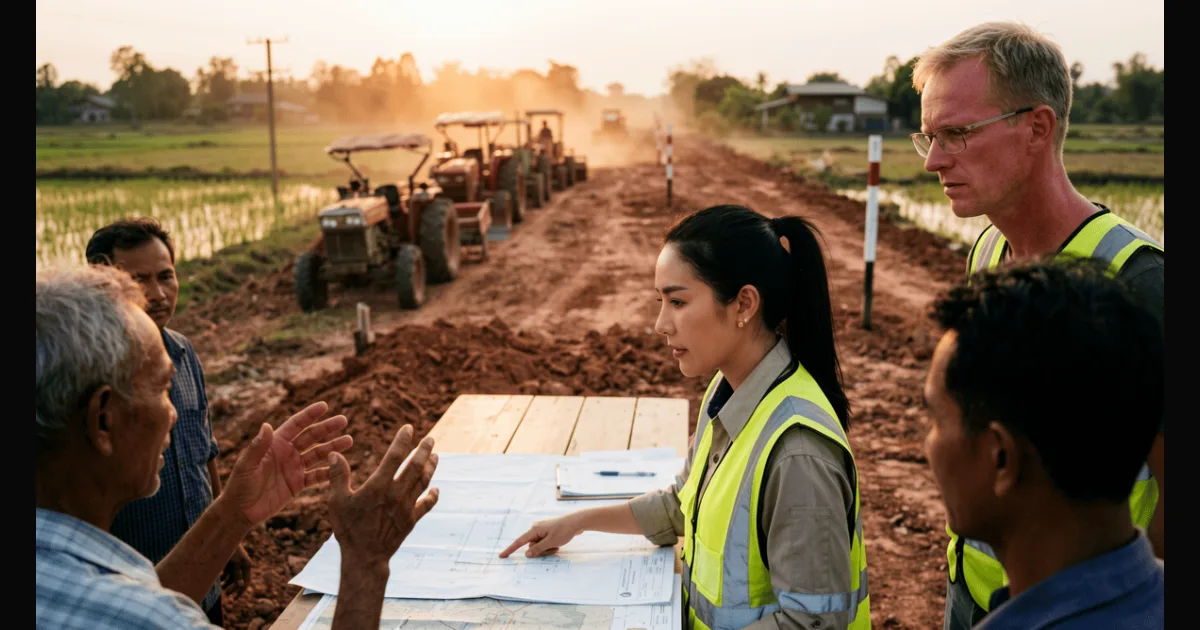
I came to Korat for eighteen months for a rail project. Six years later the project still isn't finished, and I've stopped wanting it to be.
In short
Erik, a 44-year-old Dutch civil engineer, arrives in Nakhon Ratchasima for an eighteen-month contract on the high-speed rail project. He meets Mint, the project's liaison engineer and translator, and eighteen months turns into six years.
I'm a civil engineer, Dutch, 44, and I arrived in Nakhon Ratchasima — Korat, as everyone here calls it — for an eighteen-month contract on the high-speed rail project connecting the region to Bangkok. That was six years ago.
Korat isn't a city built for passing foreigners. No tourist zone, no beach, nothing to draw anyone who doesn't have a concrete reason to be here. Most people I met those first few months worked, like me, on some infrastructure project or in the Thai army, which has one of its largest bases in the country here.
Mint was 31 when I met her, an engineer by training though working as liaison and translator between the international team and local authorities, a role that required understanding both technical drawings and municipal politics, two things that rarely go together.
We worked together nearly every day those first months, reviewing permits, coordinating with local contractors, resolving the thousand small conflicts that come up when a project this size cuts through farmland belonging to generations of families. She had a patience with the older farmers that I, with my clumsy Thai and my tendency to get impatient with bureaucracy, never quite managed to match.
The first year was just work, genuinely.
There was a moment, toward the end of that first year, when a group of farmers along one stretch of the line literally planted themselves on the route with tractors, furious about compensation they considered unfair and months of broken promises from the provincial administration. Mint spent three full days mediating between the company, the farmers, and local officials, in meetings that ran late into the night, translating not just words but the gap between what each side was saying and what the other actually needed to hear. I came along to several of those meetings, officially to explain technical details of the route, really mostly to watch her work. She never once raised her voice, not even when one of the older farmers shouted that she'd sold out to foreigners. By the end of the third day they'd reached an agreement nobody entirely loved, which is probably the best definition of a good agreement I know. That night, both of us exhausted, was the first time we had dinner alone with no real work excuse behind it. The second year we started grabbing dinner after meetings, at first with the rest of the team, then more and more often just the two of us, with the excuse of going over project details we'd actually already closed off hours earlier.
I asked her, at the end of that second year, whether she'd want us to be something more than project colleagues. She laughed and told me she'd been waiting for that question since the first quarter, and had started to think Dutch people had a particular hard time recognising the obvious.
When my original eighteen-month contract ended, we'd already been together a year, and I renewed without hesitating, even though the project itself kept slipping phase after phase, fairly normal for construction of this scale. My company joked that I was the only engineer at the firm actively praying the project wouldn't finish early.
I met her family, rice farmers in a village on the outskirts of the city, in my third year in Korat. Her father asked me the same question he asks any foreign engineer connected to the railway: whether the line would pass near his land and what compensation he'd get. I explained, with Mint translating with some embarrassment, that this wasn't exactly my department, but I'd look into it. I did. It wasn't his land, to his relief and mine.
The project is still underway, six years on, slower than anyone predicted on the original paperwork. We got married two years ago, a simple ceremony in her village, with part of my work team as guests, some of whom have been here almost as long as I have.
When people in the Netherlands ask when I'm coming back, I tell them the truth: when the project finishes. Which, with a laugh, has become something of a private joke between Mint and me, because we both know neither of us is in any particular hurry for that to happen.
Continue reading
Related stories
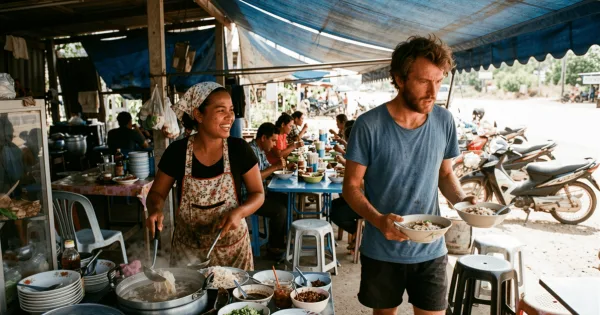
My motorbike broke down outside Korat, on the way to nowhere in particular. Ten years later, I still haven't left.
Liam, a 29-year-old Irish backpacker with no fixed plan, gets stranded outside Korat when his motorbike breaks down next to a noodle stall. Nan, the 24-year-old owner, feeds him without asking. Ten years later they're still together, running the same stall.
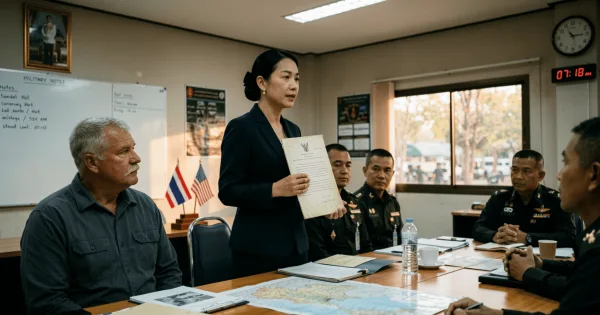
I worked coordinating joint exercises with the Thai army in Korat. The official who handled my paperwork ended up handling a lot more than that.
Frank, a 58-year-old American veteran, works as a civilian contractor coordinating joint military exercises in Korat, home to one of the Thai army's largest bases. Gift, the base's liaison official, becomes far more than an administrative contact.

I only got the health insurance because the retirement visa required it. Eight months later, that mandatory paperwork was the one thing that stopped a heart attack from wiping me out financially.
Graham, a 68-year-old British retiree, reluctantly takes out the mandatory health insurance for his retirement visa in Hua Hin. Months later, a heart attack teaches him why the policy he saw as a formality turned out to be the most important decision he made moving here.

I was 27 and felt invincible, so I never bothered with health insurance. A motorbike accident on Koh Samui taught me exactly what that feeling of invincibility costs, in baht and in loan interest.
Jordan, a 27-year-old Canadian working remotely from Koh Samui, never saw the need for private health insurance. A motorbike accident leaves him with a hospital bill that takes over a year to finish paying off.
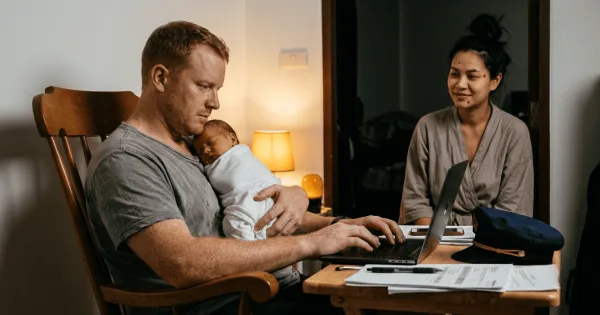
Our daughter was born in Chiang Mai on a Friday afternoon, and by Monday we were already arguing over which surname would go on each of her two passports.
Mark, a 34-year-old Canadian, and his wife Nam navigate the weeks following their daughter's birth in Chiang Mai, racing against the separate deadlines of the Canadian embassy and the Thai civil registry to secure her dual nationality.