Thai Family
The traditional Thai family functions as an extensive, interdependent network, rather than the nuclear unit (parents and children) common across much of the West. It's common for several generations to live under the same roof or very close by, for adult children to maintain active financial responsibility toward their parents, and for any member's major decisions to be discussed with or at least communicated to the rest. This model is especially strong in rural regions like Isaan, and is key to understanding almost any relationship between a foreigner and a Thai woman, since marrying her means, in practice, joining that extended family network.
Frequently asked questions
Why is the Thai family often described as "extended"?
Because obligations and bonds aren't limited to parents and children, but include grandparents, aunts, uncles and other relatives, with a network of mutual support and shared financial responsibility.
Is it normal for adult children to still live with parents?
Yes, it's common, especially before marriage, and it isn't seen as a lack of independence but as a natural part of the family structure.
How does birth order affect responsibilities in a Thai family?
The eldest child usually takes on a more active role in financially caring for parents, especially if the family has limited resources, though this varies by family.
Stories related to Thai Family
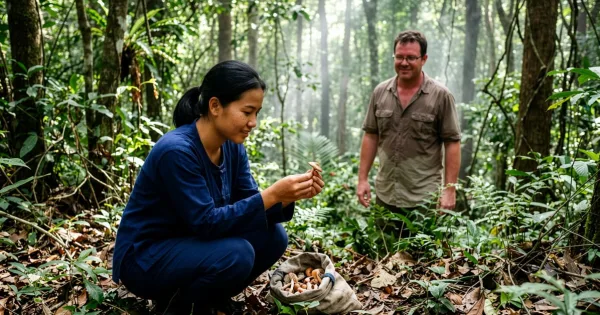
An Australian messaged me to say the woman I'd fallen for was his girlfriend of a year. Today she's my wife.
At 44, divorced for a decade, an American meets Tay on Facebook. A month later, already in love, he finds out she'd spent the past year with an Australian man who'd visited her village in Isan. She confesses everything honestly and asks for one chance. Years later, they're married and building a house to retire in.
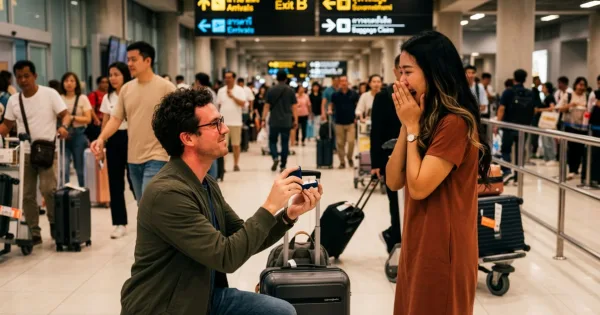
I went to Pattaya to forget a divorce. I ended up proposing to her at Bangkok airport.
A divorce sent me to Pattaya on holiday with my brother. There I met Nat, a single mother who'd lost her partner before her daughter was born. I fell in love, started doing bike deliveries at night to support her, and months later proposed at Bangkok airport. We've been married four years now in London.
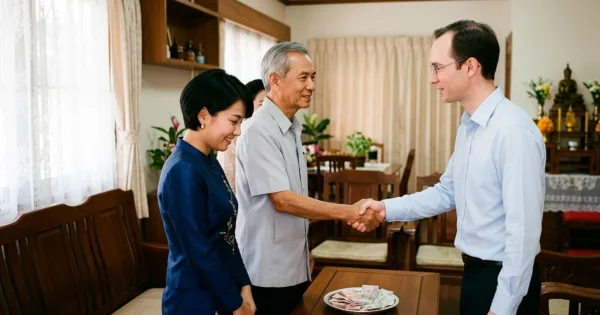
She was the perfect wife for eleven years. Then she used the visa, the custody courts, and social services to walk away with everything.
A British engineer married Knock, a woman from a respectable Bangkok family, and for eleven years she was the perfect wife. Once they moved to the UK on a spouse visa that cost two years and a fortune, everything changed: total control of the money, a women's shelter, a custody battle, and an ending he never saw coming.

I kept coming back to Pattaya for thirteen years. In the third bar on Soi Honey I met Jib.
A 42-year-old Dutchman started visiting Pattaya in 2010 and never stopped coming back every January. In 2022, in a bar on Soi Honey, he met Jib, from Isaan. Two years later he bought land from her family, fully aware of what that meant.
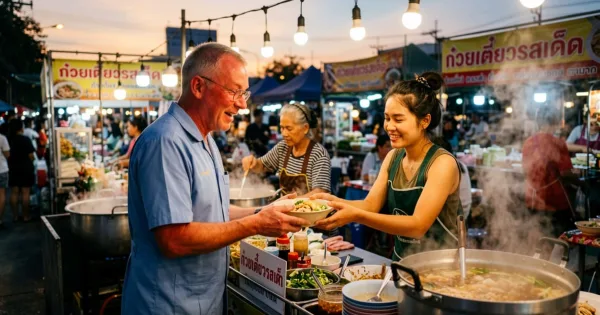
She gave me a free bowl of noodles at her mum's stall. The buffalo has never been sick.
A 50-year-old Brit, freshly divorced, met Nitia, a maths teacher in Khon Kaen who'd spent years keeping men at arm's length. Years of FaceTime, visits dodging COVID, and a first daughter later, the wedding is no longer a possibility but a foregone conclusion.