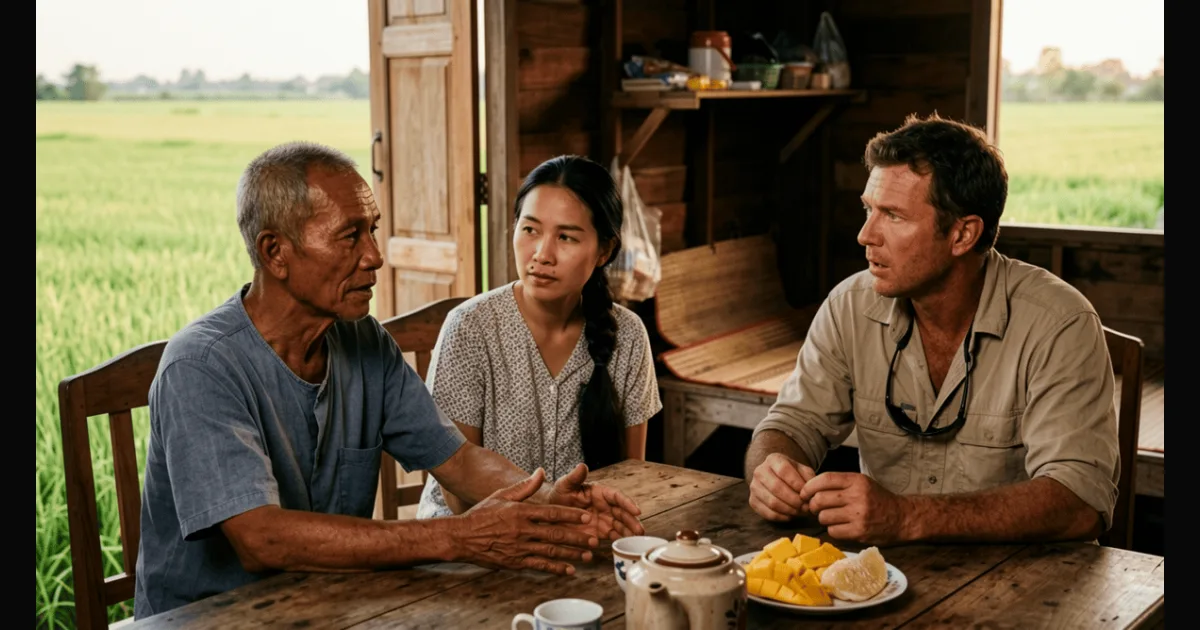
I assumed the prenup would be my idea, to protect myself. Her father sat me down at the table and explained it was the other way around: it was to protect his daughter's rice land.
In short
Simon, a 45-year-old Australian, assumes that if there's a prenuptial agreement, it'll be his idea, to protect himself. His future father-in-law explains he actually wants the agreement to protect family land that's stayed in his daughter's name for generations.
I'm Australian, 45, and I've split my time between Bangkok and Ayutthaya for ten years, working in agricultural export. I met Pear, 38, four years ago through a rice supplier her family had worked with for three generations.
When we started talking about marriage, I already had the prenup conversation planned out in my head, the kind I'd seen several foreign friends in Thailand carefully deliver: explaining that I wanted to protect my savings, without sounding distrustful. What I didn't expect was that the real conversation would be started by my future father-in-law, and from the completely opposite angle.
He sat me down at the family table one Sunday, with Pear translating even though her English was better than she let on, and explained, with the same calm he used talking about the harvest, that he wanted a prenuptial agreement before the wedding. Not to protect me from her, but to protect the rice land that had stayed in the family for three generations, registered in the daughters' names, not the husbands'.
He told me, with no drama at all, about a cousin of Pear's whose marriage to another foreigner had ended badly years earlier, with a long legal dispute over whether part of the family land should count as joint marital property. The family had won, eventually, but it cost them a lawyer, two years of tension, and a relationship with that cousin that never fully recovered.
I told him, as sincerely as I could manage in the moment, that I completely agreed, and that I'd actually planned to raise something similar myself. He laughed, the first time I'd seen him really laugh in front of me, and said he'd figured as much, but preferred to lay it out himself rather than have me hunt for the right words to bring it up.
The three of us — Pear, her father, and me — went to a lawyer in Ayutthaya two months later. The final agreement protects the family land as Pear's exclusive property, protects my own savings from Australia, and lays out clearly that anything we earn together going forward gets split a different way, whatever the two of us decide as the marriage moves along.
We've been married two years now. That Sunday at the family table is still, for me, one of the moments that best explains how this family works: not protecting itself through awkward silences, but bringing things up with the same directness they use to discuss that season's rice prices. I learned more about what it really meant to join this family in that one Sunday conversation than in the three years before it combined.
Continue reading
Related stories

I had a divorce behind me and a flat in my name in London. I brought up a prenup expecting an argument. She pulled out a list of what she wanted to add too.
Richard, a 52-year-old already-divorced Briton, dreads the prenuptial agreement conversation with his Thai fiancée June. He discovers she had her own, quite different, reasons for wanting one too.
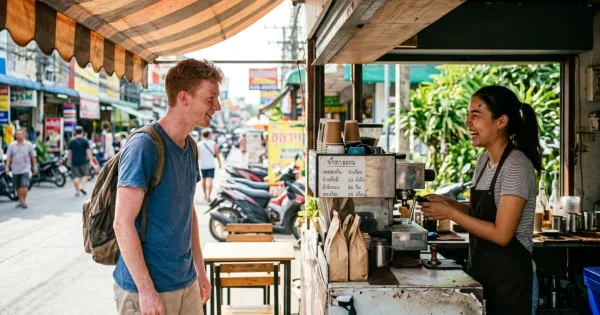
Om never asked me for a penny in two years. Now she runs Thai nights at our pub.
A 26-year-old Brit met Om in a bar on Soi Buakhao, Pattaya, then found her again months later serving coffee off Beach Road. Two years of her never asking for anything, a complicated visa and a wedding later, they now run a pub in England with Thai theme nights.
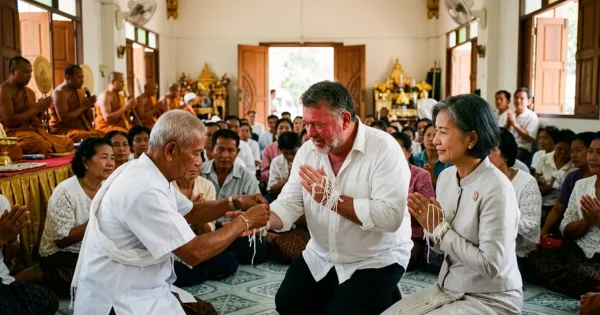
I told her I wouldn't send a single baht until we met in person. She accepted without arguing.
A 61-year-old American recounts how, after a failed relationship in Vietnam, he met May, a refreshingly honest Thai civil servant. Years of video calls and a temple wedding in Kanchanaburi with nearly 50 blessing strings later, he gained an entire family.
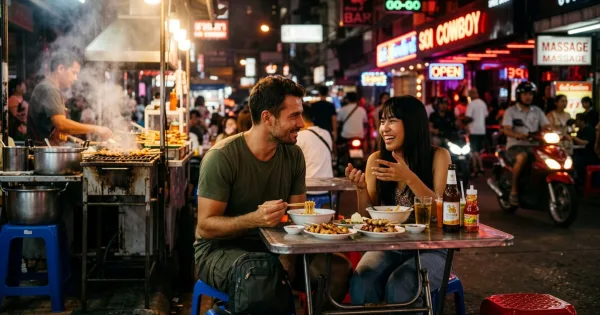
I found her dancing in a Soi Cowboy bar. Nine months later our daughter was born in Thailand.
A 31-year-old Romanian recounts how a cheap flight booked on a whim sent him back to Bangkok alone, where he reconnected with Jit at a Soi Cowboy bar. A pregnancy, months of paperwork and a wedding later, they're now a normal family in the UK.
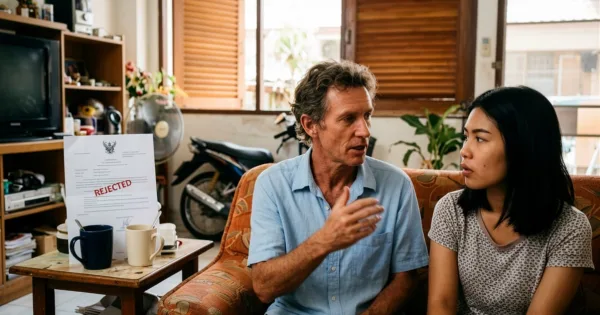
The reason for the visa rejection nearly made my head explode: she couldn't pronounce my name.
A 55-year-old Australian recounts how, after walking out of a relationship in Hua Hin in a bad mood, he wandered into the most boring looking bar in town and met the woman he'd marry in Perth years later, after a visa rejection for the strangest reason.