Is sin sod mandatory?
In short
No, sin sod isn't a legal requirement to marry in Thailand, but it is a strong cultural expectation in most traditional weddings, especially if the bride's family is from a rural region. Its absence doesn't invalidate the marriage legally, but skipping it can be read as a lack of respect toward the family.
More context
Legally registering a marriage in Thailand happens at the district office (amphur) and doesn't require any kind of dowry as an administrative condition. Sin sod belongs to the cultural and family sphere, not the legal one. Even so, in practice, many Thai families — especially in rural areas like Isaan — see sin sod as a demonstration of the groom's financial capacity and serious commitment, and its complete absence can create family tension even though it carries no legal consequence. Some couples negotiate a symbolic sin sod, or agree to return part of it to the couple after the wedding, as a way of balancing tradition with their real financial situation.
Related questions
What happens if a foreigner refuses to pay sin sod?
There's no legal consequence, but it can create tension with the bride's family, who might read it as a lack of respect or serious commitment.
Can sin sod be symbolic instead of a real payment?
Yes, it's common to agree on a symbolic amount or even return the money to the couple after the ceremony, as long as both families agree.
Does the sin sod amount depend on the bride's age or education?
Yes, it usually factors in alongside the region, the family's social status, and whether it's the bride's first marriage.
Related stories
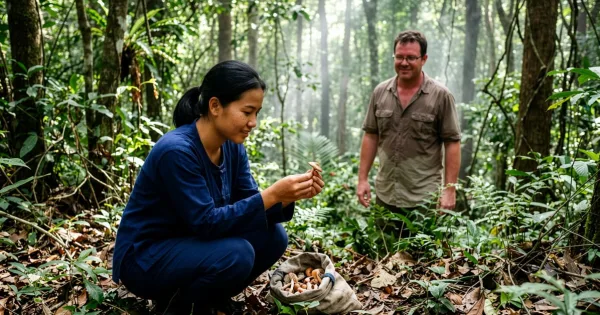
An Australian messaged me to say the woman I'd fallen for was his girlfriend of a year. Today she's my wife.
At 44, divorced for a decade, an American meets Tay on Facebook. A month later, already in love, he finds out she'd spent the past year with an Australian man who'd visited her village in Isan. She confesses everything honestly and asks for one chance. Years later, they're married and building a house to retire in.
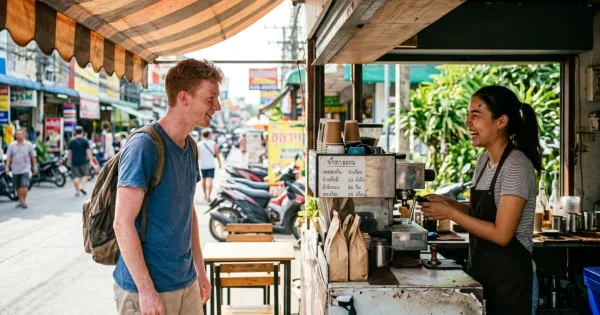
Om never asked me for a penny in two years. Now she runs Thai nights at our pub.
A 26-year-old Brit met Om in a bar on Soi Buakhao, Pattaya, then found her again months later serving coffee off Beach Road. Two years of her never asking for anything, a complicated visa and a wedding later, they now run a pub in England with Thai theme nights.
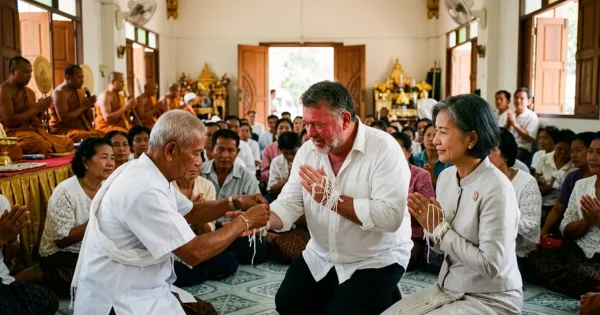
I told her I wouldn't send a single baht until we met in person. She accepted without arguing.
A 61-year-old American recounts how, after a failed relationship in Vietnam, he met May, a refreshingly honest Thai civil servant. Years of video calls and a temple wedding in Kanchanaburi with nearly 50 blessing strings later, he gained an entire family.
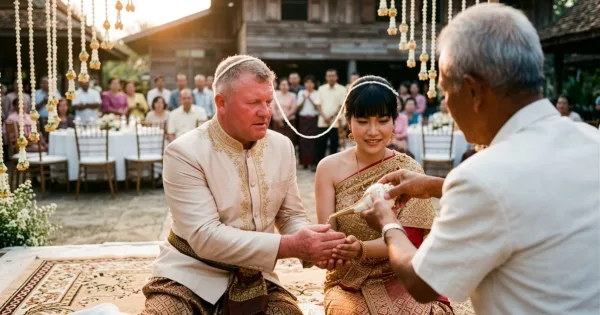
350 guests, a village chief consulting his charms for the date, and years later a message asking for a divorce.
A 50-year-old Australian recounts how a 350-guest Thai wedding in Phuket turned into a guest house in Patong, an affair with another woman, bar fights involving the police, and a final message asking for a divorce.
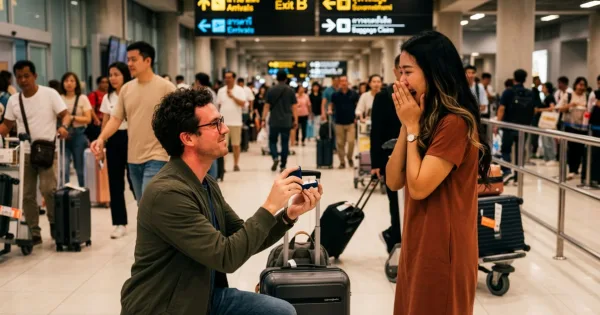
I went to Pattaya to forget a divorce. I ended up proposing to her at Bangkok airport.
A divorce sent me to Pattaya on holiday with my brother. There I met Nat, a single mother who'd lost her partner before her daughter was born. I fell in love, started doing bike deliveries at night to support her, and months later proposed at Bangkok airport. We've been married four years now in London.