Working in Thailand
In short
A work permit is legally separate from a visa, and getting one usually requires a Non-Immigrant B visa, a sponsoring Thai company, and a minimum ratio of Thai staff. Thai law also reserves a specific, periodically revised list of occupations for Thai nationals only. The foreigners in the stories on this site mostly took one of a few real paths: teaching with a proper permit, running or marrying into a family business, working remotely for a company outside Thailand, or not working at all as a retiree. Several describe working informally without a permit and accepting the legal risk that comes with it.
A work permit is legally separate from a visa, and getting one right — or choosing to work without one — shows up as a real decision in several of the stories on this site, not just paperwork in the background. This guide covers what's actually required to work legally in Thailand, which kinds of jobs are reserved for Thai nationals under Thai law, and the paths the foreigners in these stories actually took: teaching, running a business with a Thai partner, working remotely for a company back home, or simply retiring and not working at all. See also our Work Permit glossary entry for the short version, and our Visa & Immigration: Real Stories guide for the broader paperwork process.
What does this actually mean?
Thai law separates two things that foreigners often assume are the same: the right to be in the country (a visa) and the right to work in it (a work permit). Almost any paid work — behind a desk, teaching a class, running a shop — legally requires a work permit, which in turn usually requires a Non-Immigrant B visa, a Thai company willing to sponsor it, and a minimum ratio of Thai staff on that company's payroll (typically several Thai employees per foreign work permit, though the exact ratio and capital requirements vary by business type and are set by Thai labor authorities). Separately, Thai law reserves a specific list of occupations for Thai nationals only under the Alien Employment Act — historically including many manual and craft trades, agricultural labor, tour guiding, hairdressing and beauty services, and a range of other jobs seen as needing protection for the local workforce. That list is set by royal decree and revised periodically, so treat any summary — including this one — as a starting point, not a final answer, and verify current specifics with a Thai labor lawyer or the Ministry of Labour before making a decision that depends on it.
Common patterns
The stories on this site show a narrower range of real paths than the legal framework might suggest. Teaching — usually English, sometimes at an international or bilingual school — is the most common formal job among the foreigners in these stories, arriving through a proper work permit tied to the school. Running or marrying into a family business is the second-most common path, from a noodle stall to a fleet of tour boats, and it raises its own version of the work-permit question once a foreigner moves from helping informally to actually drawing income from the business. A smaller number work remotely for a company or clients outside Thailand — legally simpler in one sense, since no Thai employer needs to sponsor a permit, but genuinely unclear in Thai law for years, an ambiguity the newer long-term visa categories have started to address directly. The rest of the foreigners in these stories don't work in Thailand at all: retirees on a retirement visa, or partners supporting a household through a sponsor relationship rather than local employment.
Practical advice
The stories on this site are honest about the gap between the rule and the practice: several describe foreigners working in bars, language schools, or family businesses without a formal permit, aware of the risk — a fine or deportation — if it's ever checked, and choosing to accept that risk anyway. That's a real choice some people make, but it isn't the same as it being low-risk, and it tends to matter more once a relationship becomes serious enough that a work permit, or the decision to skip one, affects visa renewals, a mortgage application, or how a partner's family sees the foreigner's stability. See our Sponsor Relationship glossary entry for how families read a foreign partner who supports the household without working locally at all, and our Moving to Thailand: Real Stories guide for what building an actual life here, career included, tends to look like in practice.
Frequently asked questions
Do foreigners need a work permit to work in Thailand?
Yes, for almost any paid work — a work permit is legally required and separate from a visa, and getting one usually needs a Non-Immigrant B visa plus a Thai company willing to sponsor it.
What jobs are foreigners not allowed to do in Thailand?
Thai law reserves a specific list of occupations for Thai nationals under the Alien Employment Act, historically covering many manual and craft trades, agricultural work, tour guiding, and hairdressing and beauty services among others. The exact list is set by royal decree and revised periodically, so check current specifics with a Thai labor lawyer or the Ministry of Labour before relying on any summary of it.
Can I work remotely for a foreign company while living in Thailand?
It's more common than ever among the foreigners in these stories, and newer long-term visa categories have started addressing it directly, but for years it sat in a legal gray area since no Thai employer sponsors a work permit in that setup. Get current advice before assuming it's fully settled.
What jobs do the foreigners in these stories actually have?
Mostly teaching (usually English, with a proper work permit tied to a school), running or marrying into a family business, and a smaller number working remotely for employers outside Thailand. Several others don't work in Thailand at all — retirees, or partners supporting a household through a sponsor relationship instead.
What happens if a foreigner works in Thailand without a permit?
The stories on this site describe it as a real and fairly common choice — bars, language schools, and family businesses come up repeatedly — but it carries a genuine risk of a fine or deportation if it's ever checked, a risk several of the foreigners in these stories accepted deliberately rather than by accident.
Stories about Working in Thailand
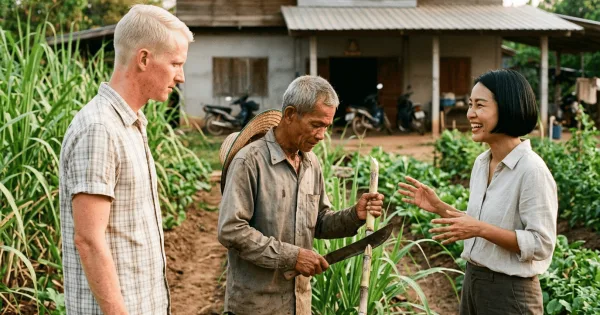
We shared a room with separate beds and her family wouldn't let me pay for a single meal. My last night, she chose to sleep somewhere else.
After seeing plenty of bar scams in Thailand, a Swedish man was introduced online to a woman from Isaan looking for something serious. Months of daily calls and a visit to her family later, the relationship never quite came together. It wasn't the love story he hoped for, and it wasn't a scam either.
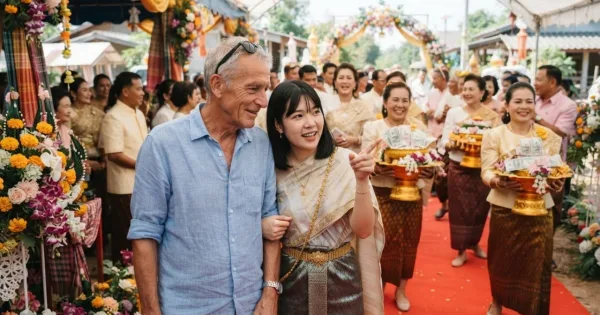
At 60, I flew to a village in Isaan for a wedding that wasn't mine, and for a few hours it felt like it was.
I was 60 when Kop, 37 years younger than me, brought me to her cousin's wedding in a village in Isaan. I met her parents, slept apart from her out of respect for her family's rules, and watched a full traditional Thai wedding, dowry included, feeling for a few hours like part of a family I barely knew.

I came to Udon Thani for a two-week hip surgery. The nurse who cared for me those two weeks is now my wife.
Peter, a 62-year-old Australian, travels to Udon Thani to have hip surgery at a private hospital, avoiding the long public waiting list back home. Ploy, the head nurse on his ward, becomes far more than his carer during recovery.
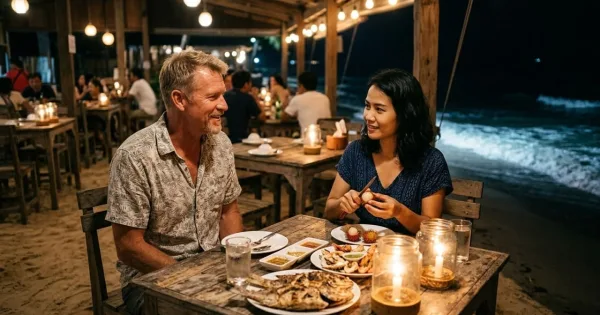
She suggested I spend some time in Pattaya alone. I didn't know it was a test, and I failed it.
A 54-year-old South African met Noi, 32, near Khao San Road in 2019. She never asked him for money despite her troubles, and the Koh Chang trip was perfect. But one night of drinks in Pattaya without her changed everything, and the pandemic finished it off.
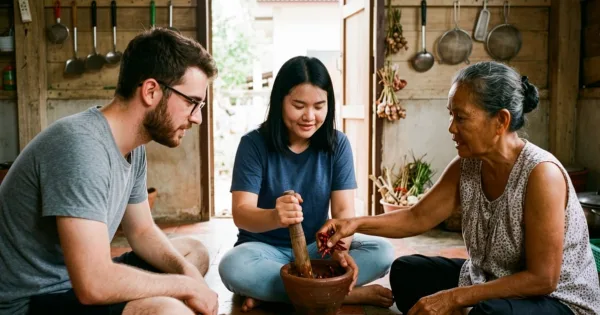
Her mum had always planned for her to move to Germany and run the family business. I showed up two weeks before that was meant to start.
A 25-year-old British English teacher met Nisa in Khon Kaen, a university graduate from Isaan with zero interest in the nightlife scene. Her mum, living in Germany, had other plans for her daughter. This is the story of how he won the family over and decided to stay in Thailand.
I found her dancing in a Soi Cowboy bar. Nine months later our daughter was born in Thailand.
A 31-year-old Romanian recounts how a cheap flight booked on a whim sent him back to Bangkok alone, where he reconnected with Jit at a Soi Cowboy bar. A pregnancy, months of paperwork and a wedding later, they're now a normal family in the UK.