Becoming Independent in Thailand
In short
Independence in Thailand gets built step by step: a bank account in one's own name, a visa that doesn't depend exclusively on the couple relationship, transport of one's own, and enough everyday Thai to solve problems without translation. Those who arrive for remote work or their own business tend to reach it sooner, while those who arrive through a relationship tend to build it more slowly, often pushed by a specific need like a separation or an illness.
Many foreigners arrive in Thailand relying completely on a Thai partner for almost everything: talking to the bank on the phone, understanding an immigration letter, even ordering food that isn't on a translated menu. This guide brings together, in one place, the concrete steps that make the difference between depending on someone for every errand and being able to manage alone: a bank account of your own, a visa of your own, transport of your own, some functional Thai, and an income source that doesn't depend on anyone else. See also our Language Barrier guide for the communication side, and our Bank Account in Thailand glossary entry for the most common first practical step.
What does this actually mean?
Real independence in Thailand doesn't arrive all at once; it's built step by step: usually a bank account in one's own name comes first, then a visa that doesn't depend on the relationship with a partner (moving from a marriage visa to a DTV or a retirement visa, for instance, if circumstances change), later a driving licence and a vehicle of one's own, and in parallel, more slowly, enough everyday Thai to solve a problem without needing translation. Each of these steps removes, one by one, the points where a breakup, an illness, or simply a partner's temporary absence would leave a foreigner completely stuck on something as basic as paying rent or seeing a doctor.
Common patterns
The most common pattern is that independence gets built in the reverse order of actual urgency: many people learn social, polite Thai first, useful but limited, and only later, pushed by a specific need (a disagreement over splitting expenses, a separation, a partner's illness), get around to sorting out the administrative side, which is what actually creates vulnerability if left unresolved. Those who arrive for remote work or their own business tend to reach financial independence sooner, precisely because their income never depended on a partner, while those who arrive through a relationship and without their own income in the country tend to take years longer to fully separate their legal and financial situation from their Thai partner's.
Practical advice
The cheapest and most practical first step is usually opening a bank account in one's own name and starting to route some everyday expenses through it, even while income keeps arriving from abroad or from a partner; see our Bank Account in Thailand glossary entry for the exact process. In parallel, it's worth checking whether the current visa depends directly on the couple relationship (like a marriage visa) and, if so, understanding in advance what alternatives exist (DTV, retirement, LTR) in case circumstances change, rather than finding out under pressure during a crisis. See also our Transport & Vehicles in Thailand guide for the mobility side, another common pillar of practical independence in Thailand.
Frequently asked questions
What's the first step to becoming more independent in Thailand?
Opening a bank account in one's own name is usually the most accessible and cheapest step, even while the main income still arrives from abroad or from a partner.
Which visas don't depend on a Thai partner?
The DTV, the retirement visa, the LTR, and the Elite visa are options that don't require being married or having a relationship with a Thai national, though each has its own income or savings requirements.
Do you need to speak fluent Thai to be independent here?
It's not essential, but a functional level for handling basic errands (bank, pharmacy, immigration) greatly reduces day-to-day dependence on others, even without reaching full fluency.
Stories about Becoming Independent in Thailand
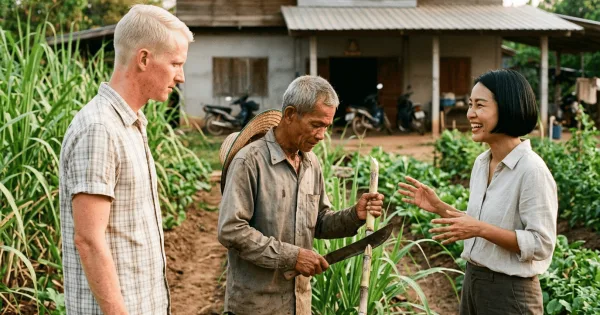
We shared a room with separate beds and her family wouldn't let me pay for a single meal. My last night, she chose to sleep somewhere else.
After seeing plenty of bar scams in Thailand, a Swedish man was introduced online to a woman from Isaan looking for something serious. Months of daily calls and a visit to her family later, the relationship never quite came together. It wasn't the love story he hoped for, and it wasn't a scam either.
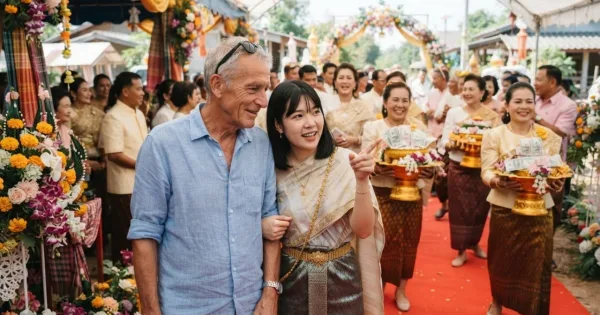
At 60, I flew to a village in Isaan for a wedding that wasn't mine, and for a few hours it felt like it was.
I was 60 when Kop, 37 years younger than me, brought me to her cousin's wedding in a village in Isaan. I met her parents, slept apart from her out of respect for her family's rules, and watched a full traditional Thai wedding, dowry included, feeling for a few hours like part of a family I barely knew.

I came to Udon Thani for a two-week hip surgery. The nurse who cared for me those two weeks is now my wife.
Peter, a 62-year-old Australian, travels to Udon Thani to have hip surgery at a private hospital, avoiding the long public waiting list back home. Ploy, the head nurse on his ward, becomes far more than his carer during recovery.
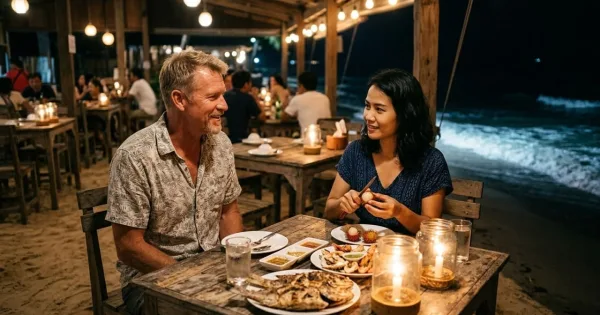
She suggested I spend some time in Pattaya alone. I didn't know it was a test, and I failed it.
A 54-year-old South African met Noi, 32, near Khao San Road in 2019. She never asked him for money despite her troubles, and the Koh Chang trip was perfect. But one night of drinks in Pattaya without her changed everything, and the pandemic finished it off.
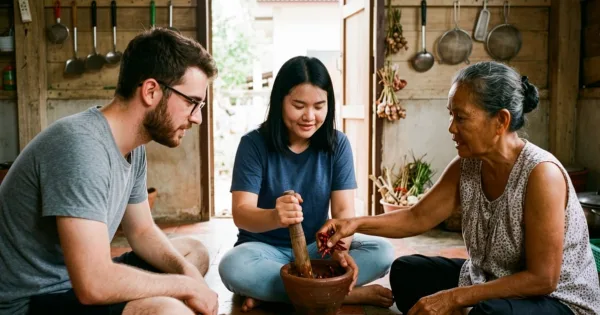
Her mum had always planned for her to move to Germany and run the family business. I showed up two weeks before that was meant to start.
A 25-year-old British English teacher met Nisa in Khon Kaen, a university graduate from Isaan with zero interest in the nightlife scene. Her mum, living in Germany, had other plans for her daughter. This is the story of how he won the family over and decided to stay in Thailand.
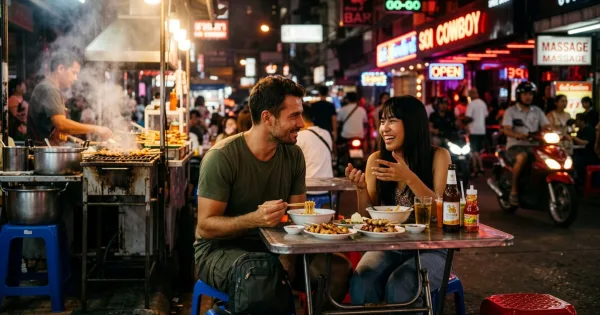
I found her dancing in a Soi Cowboy bar. Nine months later our daughter was born in Thailand.
A 31-year-old Romanian recounts how a cheap flight booked on a whim sent him back to Bangkok alone, where he reconnected with Jit at a Soi Cowboy bar. A pregnancy, months of paperwork and a wedding later, they're now a normal family in the UK.