Baht
The baht (฿) is Thailand's official currency, subdivided into 100 satang and issued by the Bank of Thailand. It circulates as coins (1, 2, 5 and 10 baht) and banknotes (20, 50, 100, 500 and 1,000 baht, each a different color for quick recognition). Its value against the dollar or euro fluctuates, but as a rough guide, figures like one hundred thousand or six hundred thousand baht — which come up often in our stories — translate to several thousand dollars, a significant sum for most Thai families and the center of more than a few conflicts and hard decisions between the couples in our stories.
Frequently asked questions
What's the best way to send money to Thailand in baht?
For larger amounts, a bank wire transfer or a service like Wise usually beats withdrawing with a foreign debit card, since both the exchange rate and the fees tend to be more favorable.
Do foreigners get charged more than Thais for the same things?
Sometimes, officially: national parks and some attractions post dual pricing with higher rates for non-Thais. Everyday purchases and services aren't usually marked up this way, though bargaining habits vary.
How far does a foreign salary or pension go in baht in Thailand?
Considerably further than in most Western countries for everyday costs like food, rent, and transport, which is why many retirees and remote workers find it comfortable to live on here.
Stories related to Baht

I followed her one day instead of believing her story about the family visits. She didn't go to the bus station — she walked into a hotel with another man.
Retired in Pattaya since 2017, a 55-year-old Polish man falls for Apple, a 32-year-old bar girl with three kids to support. For months he believes he's the only man helping her out financially. One day he decides to follow her instead of believing the usual excuse, and discovers he was just one of several sponsors supporting her at the same time.
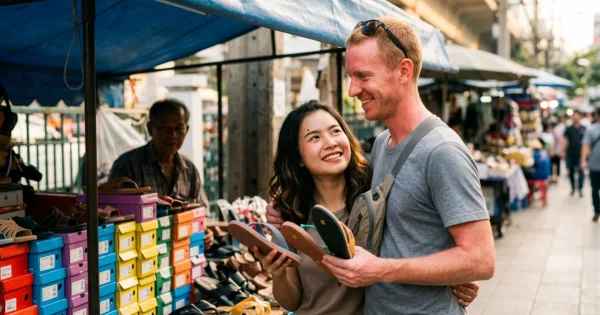
She helped me find my hotel on day one in Bangkok. Twelve days later I found out her name, her age, and almost everything she'd told me was a lie.
A 31-year-old Australian meets Noi when she offers to help him find his hotel in Asok, Bangkok. Twelve days of perfect attention later, on their last day together, she tells him she loves him just as her ID card reveals a name and age completely different from what she'd given him from the start.

I had over a hundred matches on a dating app my first night in Asia. One crossed a border to meet me, and turned out to be married, with three kids.
A 26-year-old Australian engineer, freshly arrived in Asia for a hydro power job, downloads a dating app his first night in Vientiane and racks up a hundred matches in hours. A Thai woman crosses the border from Nong Khai to meet him. Days later, a Facebook search reveals she's married to a wealthy European man and has three kids.

She was the perfect wife for eleven years. Then she used the visa, the custody courts, and social services to walk away with everything.
A British engineer married Knock, a woman from a respectable Bangkok family, and for eleven years she was the perfect wife. Once they moved to the UK on a spouse visa that cost two years and a fortune, everything changed: total control of the money, a women's shelter, a custody battle, and an ending he never saw coming.
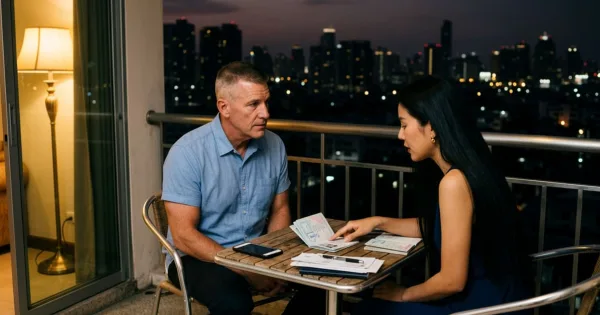
I checked her passport, her certificates, years of photos. It all lined up. It cost me $30,000 to learn that wasn't enough.
At 57, living in the quiet peace of a marriage that survived my wife's third affair, I met Pre at a bar in Nana Plaza, Bangkok. She was 37, looked 25, and had a perfectly verifiable story: passport, divorce papers, years of social media photos. Over six months I sent her 30,000 dollars for her family, her studies, and a Denmark visa that never came through.